THEOS WELLNESS
Elderberry (Sambucus nigra L.)
Traditional Herbal Wisdom, Modern Phytochemistry, and Responsible Use
Theos Wellness Herbal Monograph Series | THWM-001 | Publication Review Draft
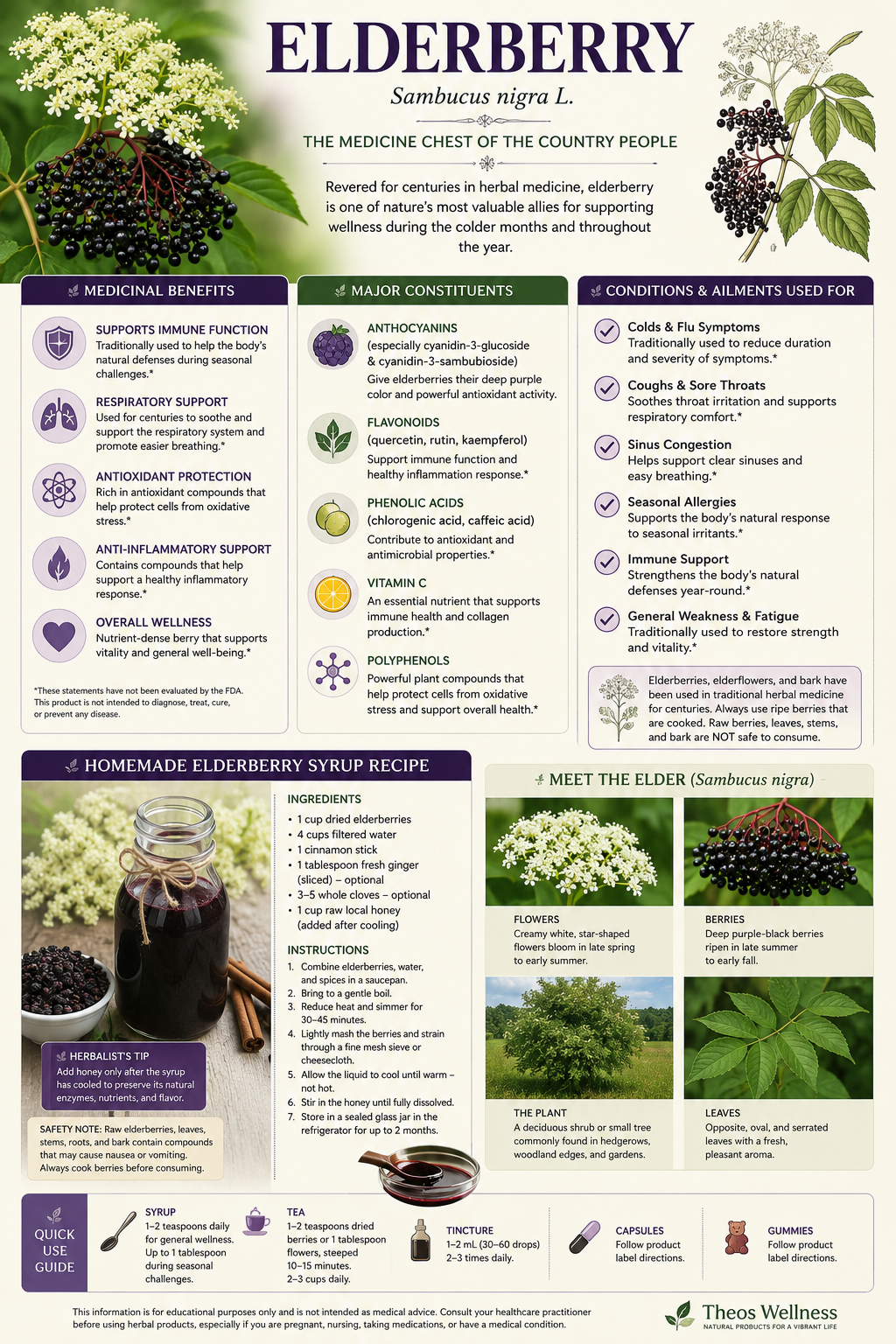
"The medicine chest of the country people."
— Phrase attributed to Ettmüller and preserved by Maud Grieve (1931)
Educational and Medical Disclaimer
This monograph is provided for general education. It describes historical herbal practice and published research concerning plant constituents and biological properties. It does not diagnose, treat, cure, or prevent disease, and it is not a substitute for individualized medical advice. Consult a qualified healthcare professional before using elderberry during pregnancy or breastfeeding, for children, with chronic illness, or alongside medications. Use commercially prepared products according to their labels; do not consume raw or unripe berries, stems, leaves, or bark.
Quick Facts
| Botanical name | Sambucus nigra L. |
|---|---|
| Common names | European black elder, black elderberry, elder |
| Family | Adoxaceae |
| Primary parts used | Fully ripe, properly processed berries; flowers are used separately in herbal practice |
| Common preparations | Syrups, liquid extracts, teas, capsules, gummies, lozenges, and foods |
| Notable constituents | Anthocyanins, flavonols, phenolic acids, procyanidins, vitamin C, and other polyphenols |
| Traditional herbal affinity | Seasonal wellness, respiratory comfort, and restorative winter preparations |
| Safety emphasis | Proper identification and processing are essential; raw or unripe plant material may cause gastrointestinal illness |
Introduction: The Elder at the Hedge
Across European hedgerows, woodland margins, streambanks, and village gardens, the elder tree has long occupied a place between food, folklore, and household medicine. Its broad clusters of cream-colored flowers arrive in early summer; by late season, those blossoms give way to dark, glossy berries used in syrups, cordials, preserves, wines, teas, and concentrated extracts.
Maud Grieve's A Modern Herbal preserved one of elder's most memorable descriptions: "the medicine chest of the country people." She also repeated John Evelyn's enthusiastic praise that the plant offered remedies from "every hedge." These statements are historical testimony, not clinical proof, but they reveal how deeply elder was woven into domestic herbalism (Grieve, 1931).
The herbalist's perspective begins with this accumulated experience. Elderberry was not valued because a marketing campaign introduced it; it was valued because generations repeatedly chose it for winter stores and seasonal preparations. Modern chemistry now gives us a second language for discussing the plant. Researchers have identified anthocyanins, flavonoids, phenolic acids, and procyanidins that display measurable antioxidant and anti-inflammatory activity in laboratory models (Domínguez et al., 2021; Osman et al., 2023).
The most responsible interpretation brings these traditions together. Historical use can guide curiosity, while contemporary research can clarify constituents, mechanisms, quality, and safety. Neither perspective requires exaggerated promises. Elderberry can be presented as a respected medicinal food and herbal preparation whose chemistry helps explain why it remains a central herb for seasonal wellness.
1. Botanical Identity and the Parts Herbalists Use
Sambucus nigra is a deciduous shrub or small tree native to Europe and parts of western Asia and North Africa. It commonly grows in moist, nitrogen-rich soils and can spread through suckering. The plant bears opposite, pinnate leaves; flattened clusters of small white to cream flowers; and dark purple-black fruits when ripe. European black elder should not be confused casually with every Sambucus species because chemistry, color, and traditional use can differ among species.
Flowers and berries are treated as distinct herbal materials. Elderflower has its own tradition and European herbal monograph, particularly for hot infusions used at the earliest signs of a common cold. The European Medicines Agency recognizes elderflower as a traditional herbal medicinal product for relief of early cold symptoms based on longstanding use (European Medicines Agency [EMA], 2018, 2024). This article centers primarily on the berry.
Ripe berries are processed into juice, syrup, extract, powder, or food. Traditional preparation usually involved heating or fermentation. This was practical for preservation and also reduced exposure to cyanogenic glycosides found most concerningly in unripe fruits and vegetative plant parts. NCCIH warns that raw or unripe berries, leaves, and stems contain cyanide-producing substances and can cause nausea, vomiting, and severe diarrhea; cooking reduces this hazard (National Center for Complementary and Integrative Health [NCCIH], 2024).
2. The Herbalist's Perspective
Elderberry is traditionally regarded as a warming, restorative companion for the colder months. Herbalists commonly describe it as supporting the body during seasonal respiratory challenges and as a valuable food-like botanical for maintaining resilience. The berries are often paired with warming spices such as ginger, cinnamon, or clove, while elderflower is frequently combined with yarrow or peppermint in traditional hot infusions.
The language matters. A responsible herbalist may say that elderberry has traditionally been used to support immune function, respiratory comfort, and recovery during seasonal illness. That wording preserves the traditional indication without promising that elderberry cures influenza, prevents infection, or replaces medical care.
Historical perspective
"If the medicinal properties of its leaves, bark and berries were fully known..." — John Evelyn, as quoted in Grieve's A Modern Herbal (1931).
This praise reflects the historical breadth of elder use. Some old practices involved leaves, bark, or roots that are not appropriate for casual modern self-use. Contemporary consumer products appropriately focus on flowers and processed ripe berries, with safety and standardization taking priority over recreating every historical preparation.
3. The Constituents Behind Elderberry's Deep Color
The intense purple-black color of European elderberry comes primarily from anthocyanins, water-soluble pigments within the larger polyphenol family. Cyanidin-3-O-sambubioside and cyanidin-3-O-glucoside are repeatedly reported as dominant elderberry anthocyanins, although cultivar, ripeness, growing conditions, processing, and storage can substantially influence the final profile (Domínguez et al., 2021; Wu et al., 2004).
Elderberry also contains quercetin derivatives, rutin, chlorogenic acid, caffeic acid, procyanidins, and additional phenolic compounds. These constituents do not act as isolated "magic bullets." Plant extracts are complex mixtures, and their measured activity depends on concentration, extraction method, food matrix, digestion, metabolism, and bioavailability.
Anthocyanins and antioxidant defense
Oxidative stress occurs when reactive molecules are produced faster than endogenous antioxidant systems can neutralize or repair their effects. In laboratory assays, elderberry polyphenols can donate electrons or hydrogen atoms, chelate certain metals, and influence cellular antioxidant pathways. Research on elderberry extracts has reported strong radical-scavenging capacity and protection against experimentally induced oxidative damage in cell models (Ferreira et al., 2022; Osman et al., 2023).
This supports careful structure/function language: elderberry polyphenols may help support the body's normal antioxidant defenses. It does not mean that a serving of elderberry syrup independently prevents chronic disease or reverses oxidative injury in humans.
Flavonoids and inflammatory signaling
Inflammation is a coordinated protective process, but excessive or prolonged inflammatory signaling can damage tissues. Elderberry phenolic extracts have influenced signaling molecules and inflammatory mediators in laboratory systems. A 2022 cellular study found that elderberry extracts reduced oxidative injury and modulated inflammatory responses in cultured cells (Ferreira et al., 2022). A broader review likewise identified antioxidant and anti-inflammatory capacity as prominent properties associated with elderberry polyphenols (Osman et al., 2023).
The appropriate conclusion is mechanistic: elderberry constituents can interact with pathways involved in normal inflammatory balance. Cell-culture concentrations and controlled assays are not the same as clinical outcomes, yet they help explain why herbalists and researchers remain interested in the berry.
Phenolic acids, procyanidins, and metabolic research
Phenolic acids and procyanidins contribute to elderberry's overall phytochemical profile. In human skeletal muscle cells, elderberry phenolic extracts, anthocyanins, procyanidins, and selected metabolites influenced glucose and fatty-acid uptake (Ho et al., 2017). This is valuable mechanistic research, but it should not be translated into a claim that elderberry treats diabetes. It demonstrates that elderberry compounds interact with metabolic processes worthy of further study.
4. Seasonal Wellness and Respiratory Comfort
Elderberry's strongest traditional identity is seasonal. Herbalists have long used syrups and extracts during times of respiratory discomfort, often alongside rest, hydration, warm teas, nourishing foods, and other supportive measures. This use aligns with elderberry's concentration of polyphenols and with laboratory work examining antioxidant, inflammatory, and host-response pathways.
Human studies have investigated standardized elderberry preparations for upper respiratory symptoms, but products, doses, timing, and study designs vary. For a retail wellness article, it is safer and more accurate to say that elderberry has a history of traditional use for seasonal respiratory wellness and that some clinical research has explored symptom support. It should not be described as a guaranteed antiviral treatment, replacement for vaccination, or substitute for evaluation when symptoms are severe or persistent.
5. Forms of Elderberry and What Each Offers
| Form | Practical considerations |
|---|---|
| Syrups and concentrates | Traditional-feeling and easy to take, but sugar content and concentration vary. Read serving size and refrigeration instructions. |
| Liquid extracts and glycerites | Convenient and concentrated. Check whether the extract lists Sambucus nigra fruit and whether alcohol or glycerin is used. |
| Capsules | Portable and lower in sugar. Milligrams alone do not reveal extract strength; look for extract ratios or standardization details. |
| Gummies and lozenges | Palatable and convenient, often combined with zinc or vitamin C. Compare added sugar and total daily serving. |
| Tea | Berry teas provide a gentle food-like preparation; elderflower tea is a different herbal material with its own traditional use. |
| Combination formulas | May include echinacea, propolis, honey, zinc, vitamin C, ginger, or sleep-support ingredients. Evaluate the entire formula, not only the word "elderberry." |
6. How to Read an Elderberry Label
- Confirm the species and part. Look for Sambucus nigra fruit or berry. Elderflower is not interchangeable with elderberry.
- Distinguish whole-fruit powder from extract. Extracts may be concentrated, while powders include more of the whole food matrix. A higher milligram number does not automatically mean a stronger product.
- Look for meaningful quality information. Reputable manufacturers disclose serving size, extraction medium, other ingredients, allergen information, lot identification, and storage instructions. Third-party testing is a positive quality signal when available.
- Review combination ingredients. Zinc, vitamin C, honey, propolis, echinacea, melatonin, or herbs may change who should use the product and how it fits into a routine.
- Compare added sugars. Syrups, gummies, and lozenges can differ widely in sweetness and serving size. Sugar-free formulas may use sugar alcohols that cause digestive upset in some people.
7. Safety, Preparation, and Responsible Use
Properly manufactured elderberry products are generally used for short periods and are usually well tolerated, but safety depends on the plant part, preparation, dose, formulation, and user. The most important consumer warning concerns raw or unripe berries and vegetative parts of the plant. Cyanogenic glycosides can release cyanide during digestion and may cause nausea, vomiting, diarrhea, weakness, or more serious toxicity in large exposures (NCCIH, 2024).
Research in American elderberry found low or nonquantifiable cyanogenic compounds in commercial juice while stems and some fruit tissues contained higher levels, supporting careful destemming and processing rather than fear of properly manufactured products (Appenteng et al., 2021). Home preparation requires positive plant identification, fully ripe fruit, removal of stems, and a trusted preservation method.
Use extra caution when:
- pregnant or breastfeeding, because safety data are insufficient;
- giving an herbal product to a young child;
- managing an autoimmune condition, organ transplant, or immunosuppressive therapy;
- taking medications or multiple supplements;
- symptoms include breathing difficulty, dehydration, persistent fever, confusion, chest pain, or rapid worsening.
The final item is not an elderberry contraindication; it is a reminder that serious symptoms require medical assessment rather than reliance on a supplement.
8. Frequently Asked Questions
Can elderberry be taken every day?
Some people use food-like elderberry preparations seasonally, but long-term daily supplement safety is not well established. Follow the product label and discuss extended use with a healthcare professional.
Is elderberry syrup better than capsules?
Neither is universally better. Syrup offers a traditional format and is easy to adjust; capsules may be more convenient and lower in sugar. Concentration, quality, and the full ingredient list matter more than the dosage form alone.
Can I eat elderberries raw?
Raw or unripe berries and other plant parts can contain cyanide-producing compounds. Use properly cooked fruit or reputable commercial preparations.
Is elderflower the same as elderberry?
No. They come from the same plant but are different herbal materials. Their chemistry, preparations, and traditional indications overlap only partially.
Does elderberry "boost" the immune system?
"Boost" is imprecise. A more responsible description is that elderberry polyphenols interact with antioxidant, inflammatory, and immune-related pathways and that the herb is traditionally used for seasonal immune support.
Can elderberry replace medical treatment?
No. Elderberry is a supportive wellness product, not a substitute for diagnosis, prescribed treatment, vaccination, hydration, or urgent care when needed.
9. Theos Wellness Perspective
Elderberry deserves neither dismissal nor exaggeration. Its reputation was shaped by generations of herbal practice, and its deep color reflects a genuine concentration of bioactive polyphenols. Modern research helps explain antioxidant and inflammatory mechanisms, while responsible wording keeps those findings in proportion. The most balanced place for elderberry is as a properly prepared seasonal wellness herb used alongside sound nutrition, rest, hydration, and appropriate healthcare.
10. Explore Elderberry at Theos Wellness
Recommended Elderberry Products Available at Theos Wellness
Traditional Syrups
- Herbs For Kids Eldertussin Elderberry Syrup (SKU: D0102HPVI6X)
- Flora Elderbry Plus Immune (SKU: D0102H547XX)
Herbal Teas
- Buddha Teas Organic Elderberry Tea (SKU: D0102H5NRA8)
- Traditional Medicinals Organic Echinacea Elder Tea (SKU: D0102H5KJY8)
Gummies & Lozenges
- Olly Immune Sleep Elderberry (SKU: D0102HPCLB8)
- Zand Elderberry Zinc Gummies (SKU: D0102H5ND06)
- Wedderspoon Manuka Honey Elderberry Lozenges (SKU from your inventory)
Children's Formulas
- Elderberry + Propolis Kids Daily Throat Spray (SKU: D01027R2PUP)
Editorial note: Inclusion in this list is for navigation and comparison, not an endorsement that any product treats or prevents disease.
The Bottom Line
European black elderberry is one of Western herbalism's most enduring seasonal botanicals. Historical herbalists prized the elder as a household medicine chest, and modern phytochemistry confirms that its ripe berries contain anthocyanins, flavonols, phenolic acids, procyanidins, and other compounds with measurable antioxidant and anti-inflammatory properties in laboratory systems. These findings give biological context to traditional use without turning the herb into a cure-all.
Choose properly processed products, distinguish berries from flowers, read combination labels carefully, and avoid raw or unripe plant material. Used responsibly, elderberry can hold an appropriate place in a seasonal wellness routine while remaining secondary to medical care when illness is serious.
References
Appenteng, M. K., Krueger, R., Johnson, M. C., Ingold, H., Bell, R., Thomas, A. L., & Greenlief, C. M. (2021). Cyanogenic glycoside analysis in American elderberry. Molecules, 26(5), 1384. https://doi.org/10.3390/molecules26051384
Domínguez, R., Zhang, L., Rocchetti, G., Lucini, L., Pateiro, M., Munekata, P. E. S., & Lorenzo, J. M. (2021). Elderberry (Sambucus nigra L.) as potential source of antioxidants: Bioactive compounds and antioxidant activity. Antioxidants, 10(11), 1799. https://doi.org/10.3390/antiox10111799
European Medicines Agency. (2018). Elder flower: Summary for the public. https://www.ema.europa.eu/en/documents/herbal-summary/elder-flower-summary-public_en.pdf
European Medicines Agency. (2024). Addendum to assessment report on Sambucus nigra L., flos. https://www.ema.europa.eu/en/documents/herbal-report/addendum-assessment-report-sambucus-nigra-l-flos_en.pdf
Ferreira, S. S., Silva, P., Silva, A. M., & Nunes, F. M. (2022). Elderberry (Sambucus nigra L.) extracts promote anti-inflammatory and cellular antioxidant activity. Food Chemistry: X, 15, 100437. https://doi.org/10.1016/j.fochx.2022.100437
Grieve, M. (1931). A modern herbal: Elder. Botanical.com. https://botanical.com/botanical/mgmh/e/elder-04.html
Ho, G. T. T., Kase, E. T., Wangensteen, H., & Barsett, H. (2017). Phenolic elderberry extracts, anthocyanins, procyanidins, and metabolites influence glucose and fatty acid uptake in human skeletal muscle cells. Journal of Agricultural and Food Chemistry, 65(13), 2677–2685. https://doi.org/10.1021/acs.jafc.6b05582
National Center for Complementary and Integrative Health. (2024). Elderberry: Usefulness and safety. https://www.nccih.nih.gov/health/elderberry
Osman, A. G., Avula, B., Katragunta, K., Ali, Z., Chittiboyina, A. G., & Khan, I. A. (2023). Elderberry extracts: Characterization of the polyphenolic chemical composition, quality consistency, safety, adulteration, and attenuation of oxidative stress- and inflammation-induced health disorders. Molecules, 28(7), 3148. https://doi.org/10.3390/molecules28073148
Viapiana, A., & Wesolowski, M. (2017). The phenolic contents and antioxidant activities of infusions of Sambucus nigra L. Plant Foods for Human Nutrition, 72, 82–87. https://doi.org/10.1007/s11130-016-0594-x
Wu, X., Gu, L., Prior, R. L., & McKay, S. (2004). Characterization of anthocyanins and proanthocyanidins in some cultivars of Ribes, Aronia, and Sambucus and their antioxidant capacity. Journal of Agricultural and Food Chemistry, 52(26), 7846–7856. https://doi.org/10.1021/jf0486850
